HONG KONG
EST. 2026
JIL SANDER
01 FIELD
Independent image study
2026

Drawing from Olga Rozanova’s Green Stripe and Herb Ritts’s sculptural approach to fashion photography, the series asks what happens when figure and ground, body and clothing, positive and negative space are given equal compositional weight.
Each photograph begins as an abstract proposition—an interval, aperture, division, projection, curve or horizontal field—before resolving into a dressed body.
Rather than illustrating Suprematism, the project uses the actual construction of Jil Sander garments, bodily position, cropping and camera orientation to destabilize the conventions through which fashion photographs are normally read.
FIELD explores the body and garment as pure form.


PROJECTION — plane / depth
The black cape dress is photographed from an oblique rear angle so that its actual cape construction projects into a large geometric field. The exposed V of the back and the white studio occupy adjacent areas of the frame. Nothing is added or rearranged: perspective turns the garment’s existing three-dimensional construction into a nearly flat composition.
INTERVAL — repetition / negative space
Two identical figures are placed at opposite edges of the frame so that their charcoal coats construct a central white form between them. The white studio is no longer background; the empty interval carries as much visual weight as either body. Repetition also removes the expectation of a single privileged subject.
APERTURE — inversion / orientation
The triangular opening of the ivory shirt becomes a field of skin within a much larger triangular bodily form. The model is photographed in a physically plausible crouch and the finished photograph is rotated 180 degrees; once inverted, the compressed body itself reads as an acute geometric mass, echoing the smaller triangle cut into the garment. The image therefore operates through two related triangles at different scales—one produced by clothing construction, the other by anatomy, pose and viewpoint. Rounded areas of skin, the dark hair and surrounding white field complicate that geometry, delaying the moment when the composition resolves back into a recognizable body.
TORSION — curve / counter-rotation
Here the geometry comes primarily from the body. The model remains upright while the ribcage and pelvis rotate in opposing directions, producing a continuous curve through the frame. The dress’s horizontal back opening bends with the body and becomes a narrow interval of skin between two black masses. This image draws most directly on Ritts’s ability to make anatomy read as sculpture.
JIL SANDER
01 FIELD
Independent image study
2026
FIELD explores the body and garment as pure form.
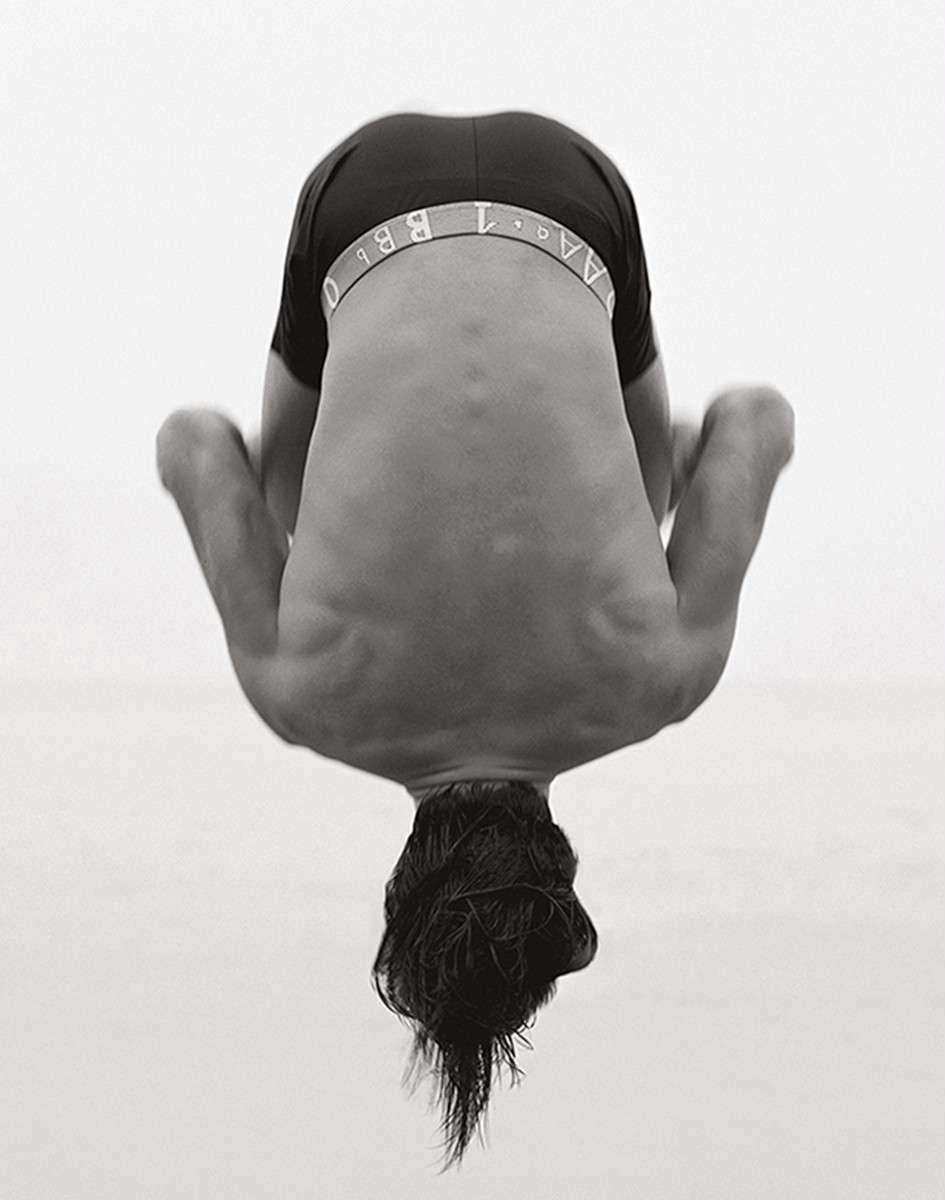
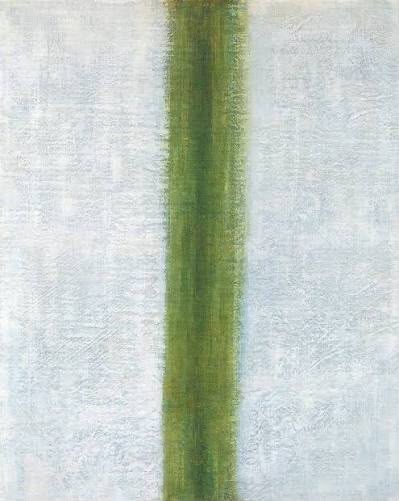
Drawing from Olga Rozanova’s Green Stripe and Herb Ritts’s sculptural approach to fashion photography, the series asks what happens when figure and ground, body and clothing, positive and negative space are given equal compositional weight.
APERTURE — inversion / orientation
The triangular opening of the ivory shirt becomes a field of skin within a much larger triangular bodily form. The model is photographed in a physically plausible crouch and the finished photograph is rotated 180 degrees; once inverted, the compressed body itself reads as an acute geometric mass, echoing the smaller triangle cut into the garment. The image therefore operates through two related triangles at different scales—one produced by clothing construction, the other by anatomy, pose and viewpoint. Rounded areas of skin, the dark hair and surrounding white field complicate that geometry, delaying the moment when the composition resolves back into a recognizable body.
REFERENCE
Olga Rozanova, Green Stripe
Backflip, Paradise Cove, Herb Ritts
Each photograph begins as an abstract proposition—an interval, aperture, division, projection, curve or horizontal field—before resolving into a dressed body.
TORSION — curve / counter-rotation
Here the geometry comes primarily from the body. The model remains upright while the ribcage and pelvis rotate in opposing directions, producing a continuous curve through the frame. The dress’s horizontal back opening bends with the body and becomes a narrow interval of skin between two black masses. This image draws most directly on Ritts’s ability to make anatomy read as sculpture.
PROJECTION — plane / depth
The black cape dress is photographed from an oblique rear angle so that its actual cape construction projects into a large geometric field. The exposed V of the back and the white studio occupy adjacent areas of the frame. Nothing is added or rearranged: perspective turns the garment’s existing three-dimensional construction into a nearly flat composition.
INTERVAL — repetition / negative space
Two identical figures are placed at opposite edges of the frame so that their charcoal coats construct a central white form between them. The white studio is no longer background; the empty interval carries as much visual weight as either body. Repetition also removes the expectation of a single privileged subject.
Rather than illustrating Suprematism, the project uses garment construction, bodily position, cropping and camera orientation to destabilize how fashion photographs are normally read.
HONG KONG
EST. 2026
JIL SANDER
01 FIELD
Independent image study
2026
FIELD explores the body and garment as pure form.
Drawing from Olga Rozanova’s Green Stripe and Herb Ritts’s sculptural approach to fashion photography, the series asks what happens when figure and ground, body and clothing, positive and negative space are given equal compositional weight.
APERTURE — inversion / orientation
The triangular opening of the ivory shirt becomes a field of skin within a much larger triangular bodily form. The model is photographed in a physically plausible crouch and the finished photograph is rotated 180 degrees; once inverted, the compressed body itself reads as an acute geometric mass, echoing the smaller triangle cut into the garment. The image therefore operates through two related triangles at different scales—one produced by clothing construction, the other by anatomy, pose and viewpoint. Rounded areas of skin, the dark hair and surrounding white field complicate that geometry, delaying the moment when the composition resolves back into a recognizable body.
REFERENCE
Olga Rozanova, Green Stripe
Backflip, Paradise Cove, Herb Ritts
Each photograph begins as an abstract proposition—an interval, aperture, division, projection, curve or horizontal field—before resolving into a dressed body.
TORSION — curve / counter-rotation
Here the geometry comes primarily from the body. The model remains upright while the ribcage and pelvis rotate in opposing directions, producing a continuous curve through the frame. The dress’s horizontal back opening bends with the body and becomes a narrow interval of skin between two black masses. This image draws most directly on Ritts’s ability to make anatomy read as sculpture.
PROJECTION — plane / depth
The black cape dress is photographed from an oblique rear angle so that its actual cape construction projects into a large geometric field. The exposed V of the back and the white studio occupy adjacent areas of the frame. Nothing is added or rearranged: perspective turns the garment’s existing three-dimensional construction into a nearly flat composition.
INTERVAL — repetition / negative space
Two identical figures are placed at opposite edges of the frame so that their charcoal coats construct a central white form between them. The white studio is no longer background; the empty interval carries as much visual weight as either body. Repetition also removes the expectation of a single privileged subject.
Rather than illustrating Suprematism, the project uses garment construction, bodily position, cropping and camera orientation to destabilize how fashion photographs are normally read.
HONG KONG
EST. 2026